
By Vervida Home
Style plants on floating shelves by checking the growing conditions before choosing the composition. A pot must fit fully on the shelf, the plant must suit the light at that location, and you must be able to take it down for care without stretching or standing on furniture. Start with a small display; if the wall fails those checks, choose another plant location.
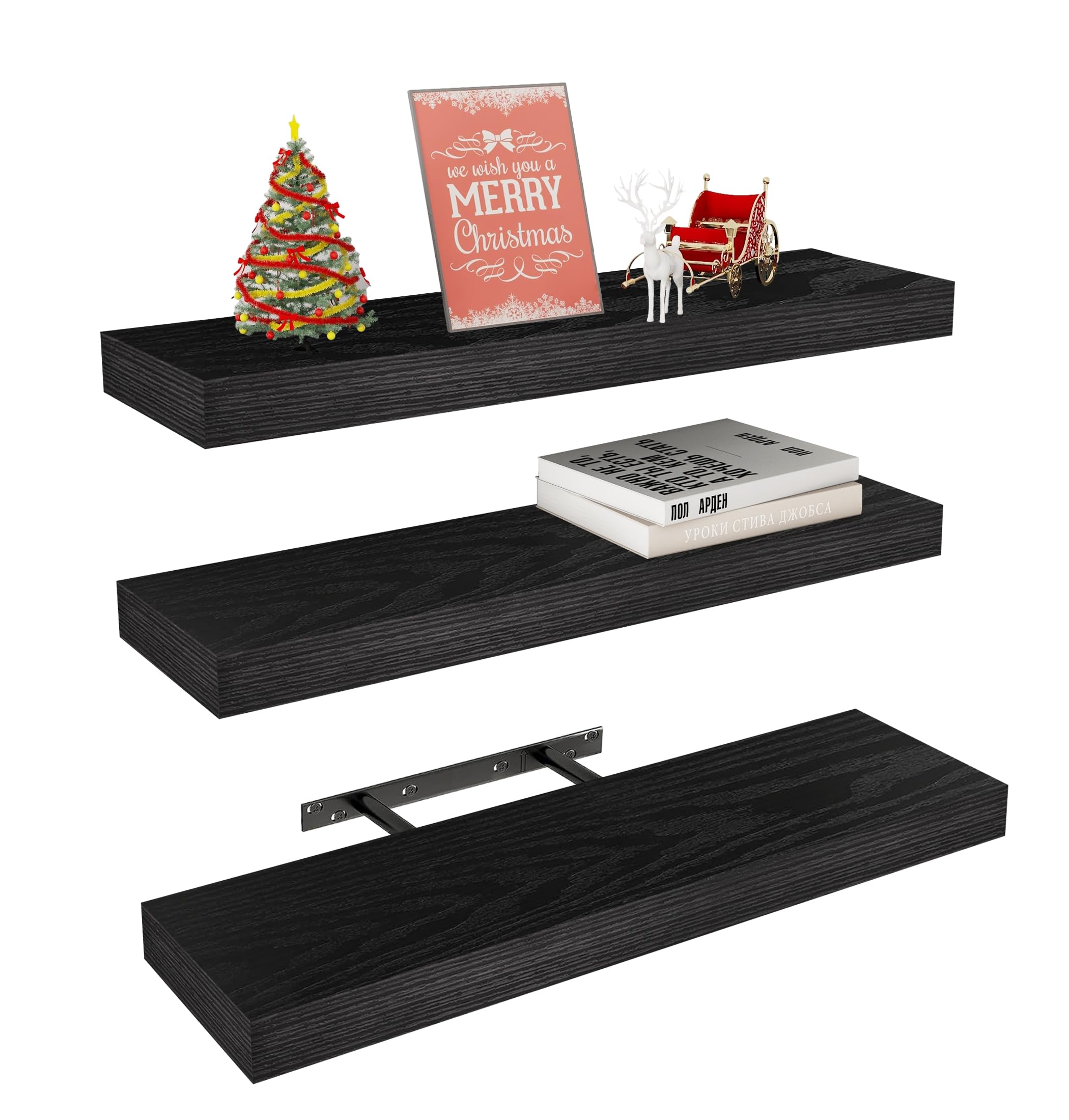
This manufacturer image identifies the shelf configuration. It does not show a tested living-plant installation or establish that a particular pot will fit.
How we made this guide
This AI-assisted guide uses the verified Vervida launch-product record, University of Minnesota Extension's indoor-light guidance, and University of Maryland Extension's watering guidance. Plant-care facts are separate from our display suggestions. We did not grow plants on these shelves or test the material's response to water.
Check the light on the shelf, not elsewhere in the room
University of Minnesota Extension recommends selecting plants whose requirements match the actual indoor light environment. A room described as bright can still have a shaded shelf, especially when it sits far from a window or below another shelf.
Observe the proposed location at different times of day before choosing a plant. Consider window direction, curtains, and shadows from the room and the shelf arrangement. Use that observation to discuss an appropriate plant with a nursery or consult species-specific guidance. Do not treat every plant labeled for lower light as interchangeable, or assume a trailing plant will thrive because it looks attractive in a styled image.
If the wall is unsuitable for a living plant, an empty section, a small frame, or an artificial plant may achieve the visual effect without a plant-care problem. There is no requirement to put living plants on every shelf.
Measure the whole pot and saucer
Measure the base footprint of the pot, cachepot, and saucer together. Compare it with the usable shelf surface. Decorative pots often widen above the base, so also check how much space their widest section occupies next to other objects.
The verified Vervida launch shelves are 24 inches long, 5.8 inches deep, and 1.5 inches thick, made from engineered wood. A 5.8-inch depth is a measurement, not a universal pot-size recommendation. The complete base must fit without overhanging an edge, and the display needs a wall-specific support assessment.
Consider the total weight of the plant, pot, saucer, and growing medium after watering. A dry, empty pot does not represent the finished display's weight. Use the selected shelf's current instructions and ask a qualified installer if the mounting or load suitability is uncertain.
Build a display around one plant group
For a restrained arrangement, choose one plant group as the focal point and leave an open section beside it. The amount of open space is a visual decision, not a load limit. Look at the display from the doorway and from the room's usual seating position before adding another object.
If the plant trails, check where the foliage will go as it grows. Keep it away from walking routes, nearby electrical equipment, and objects you need to remove regularly. A plant that blocks a book or frame can make a display awkward to use even when the original arrangement looked balanced.
Keep the overall plan adjustable. A plant can grow beyond the arrangement, and an attractive pot may need to move when care requirements change.
Plan an off-shelf watering routine
University of Maryland Extension explains that small plants can be watered in a sink and returned after the water drains, with excess water emptied from the drainage saucer. That makes a useful starting point for a removable display. Water according to the plant's needs rather than a fixed decorative refresh schedule.
Before placing the pot, rehearse the removal and return with the empty container. You should be able to reach it comfortably without leaning over other objects. For plants you can manage this way, take them to an appropriate watering location, let them drain, empty excess saucer water, and check the exterior and shelf surface before returning them.
A saucer helps contain routine drainage but is not a guarantee against leaks or spills. The Vervida record does not establish water resistance. If water management cannot be kept separate from the shelf, choose another surface for the plant rather than treating a decorative tray as a material upgrade.
Keep care access ahead of symmetry
A symmetrical arrangement may look polished but still be difficult to maintain. Use care access as a final check before installation:
- Does the selected plant suit the light at the proposed position?
- Does the whole pot and saucer footprint fit fully on the shelf?
- Has the watered display's total weight been considered?
- Can the pot be removed and returned without awkward reaching?
- Is there space for growth without blocking room use or nearby objects?
- Can routine watering occur away from the shelf and electrical equipment?
If any answer is uncertain, simplify the composition or move the plant. A shelf with one maintainable focal point is more useful than a fuller display that cannot be cared for comfortably.
Source and limits
Product dimensions and material use the owner-verified July 6, 2026 manufacturer record. The university sources inform light selection and routine watering; they do not approve a specific shelf load or Vervida installation. Plant choice, wall condition, mounting, and household access require individual consideration. No claims about pet suitability or material moisture resistance are made.
Related reading
- Choose the depth for your actual objects
- Style floating shelves without clutter
- Browse floating shelves by size and depth
- Compare the matching 24 inch Vervida shelf details
If this configuration fits your care and measurement checks, check current Vervida shelf details on Amazon.