
By Vervida Home
Organize books on floating shelves by fit and use before arranging them by color. Select a small reading collection, measure the largest books and the bookends, and check the total intended load against the selected shelf's instructions. A display shelf is not automatically suitable for a wall-to-wall library, and an empty stretch of shelf is not an invitation to keep adding books.
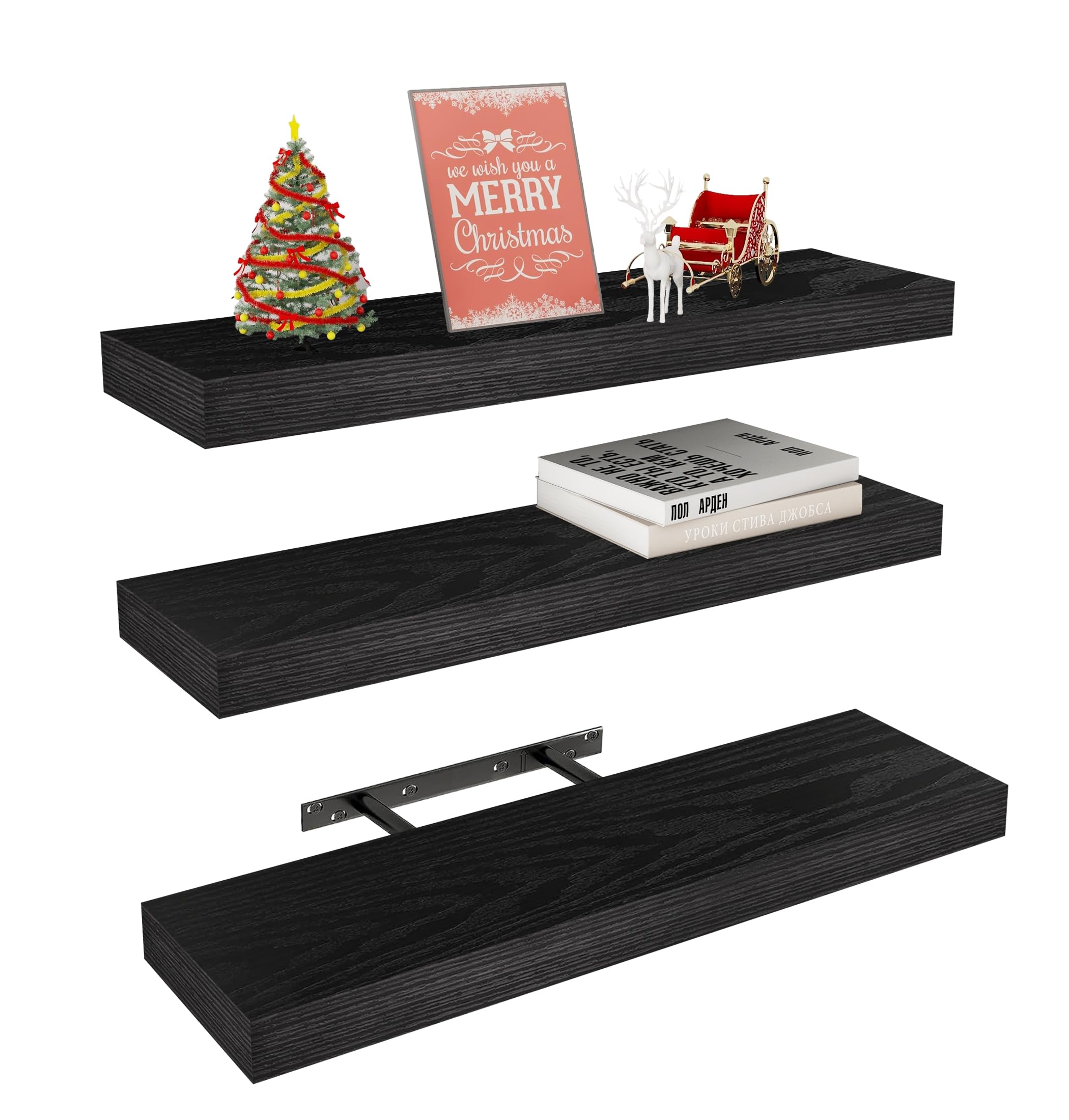
This manufacturer image shows the shelf configuration, not a tested book-storage installation. No book count or installation capacity is established by the image.
How we made this guide
This AI-assisted guide combines verified launch-product dimensions with a limited storage principle from the Library of Congress guide to storing books: oversized books stored flat should be fully supported underneath. Organization examples are editorial suggestions. We did not weigh a book collection, test the shelves, or assess preservation suitability for valuable volumes.
Pick the collection before picking the arrangement
Choose the books you actually want near this location: current reading, occasional references, or a small display group. Keep those purposes distinct. If you need most of your collection close at hand, appropriately sized book storage may suit the job better than a few decorative wall shelves.
For a reading corner, keep current books together rather than distributing them across several decorative groups. For a desk, group references by the task that makes you reach for them. A system that follows how you use the books is easier to maintain than one chosen only for a photograph.
Check depth before choosing upright or flat storage
Measure each book from spine to outer edge, then compare that depth with the usable shelf surface. Check bookends at the same time: a wide or projecting base can take more space than the row of books alone.
The verified Vervida launch configuration provides a concrete example: each shelf is 24 inches long and 5.8 inches deep, with a thickness of 1.5 inches. Do not assume that a large hardcover fits simply because there is enough horizontal length for several spines.
If an oversized book must be placed flat, the Library of Congress guidance calls for full support underneath. A narrower display shelf is not the right surface if the book extends beyond it. Choose deeper suitable storage instead of using a protruding stack as a styling solution.
Make one useful group, with room to retrieve a book
For ordinary reading books that fit upright, test a supported row on a table first. Use stable bookends suited to the shelf and book sizes, and check that the group remains upright when a volume is removed. Bookends add weight and occupy shelf space; include both in your measurements.
Do not wedge the books so tightly that removing one requires pulling the whole group forward. Equally, do not rely on a decorative object to support a row unless it is actually suitable for that role. Separate visual decoration from the practical job of keeping books in place.
A useful test is to remove the middle book and return it. If that disrupts the arrangement, reduce the group or change the support before moving it to the installed shelf.
Treat visual balance and load as different questions
Alternating a book group with an open section can make the wall look calmer. It does not establish that the mounting system can support the load. Neither symmetry nor a short row of books is a capacity test.
Weigh the intended books, bookends, and any decorative objects together. Confirm the applicable limits in the selected product's current instructions and the wall-specific mounting plan. Do not convert a manufacturer's ambiguous load statement into a per-shelf promise or a fixed number of books.
If the suitable load or support is uncertain, use another storage location while you obtain qualified installation advice. Avoid adding a new book just because there appears to be room at the end of the row.
Add decoration only after the books work
Once the reading group fits and can be used comfortably, decide whether it needs anything else. A small frame may be enough, or the books may already provide all the color and variation the wall needs.
Keep liquids and plant-watering activities separate from the book group. This is a practical arrangement choice, not a promise that a tray can protect books or an engineered-wood shelf from every spill. Valuable, fragile, or irreplaceable books deserve a storage decision based on their condition, not just the look of a floating-shelf display.
Use a rotation rule instead of expanding the row
Choose a simple maintenance routine: when a finished book leaves the display, another can take its place only after fit and weight are checked. Keep the remaining collection in suitable storage elsewhere.
- Select the small group you use at this location.
- Measure books and bookend bases against the shelf surface.
- Test removal and return on a table before arranging the installed shelf.
- Check combined weight and current installation instructions.
- Reassess the group whenever its contents change.
The aim is an accessible reading selection, not the maximum possible book count.
Source and limits
Vervida dimensions come from the owner-verified July 6, 2026 manufacturer record. The Library of Congress principle concerns support for books, not the structural capacity of wall shelves. Its page was rate-limited during this review; the specific full-support statement was checked in its indexed source excerpt. This guide does not replace product instructions, a wall assessment, or advice from a conservator for valuable books.
Related reading
- Choose floating-shelf depth for your objects
- Arrange a display without filling every inch
- Browse floating shelves by size and depth
- Compare the matching 24 inch Vervida shelf details
If the verified dimensions suit your selected collection, check current Vervida shelf details on Amazon.