
By Vervida Home
In a small bedroom, start with one wall and one job for the shelves. A limited display above a dresser or beside a reading area may be more useful than filling every open wall. Measure the objects and the way you move through the room before choosing a shelf length or depth. This guide does not recommend placing shelves or loose objects directly above a bed.
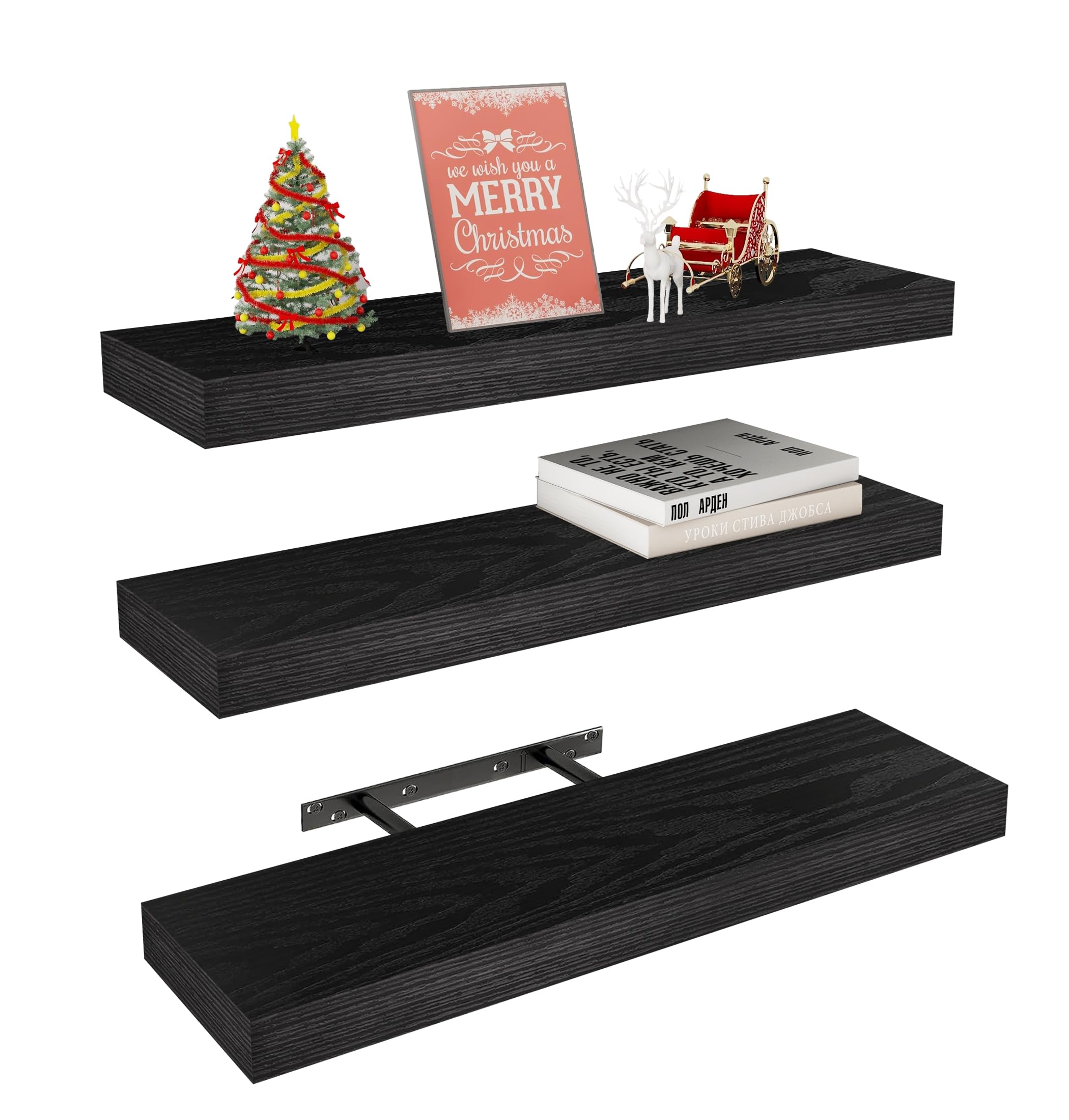
The image shows the product configuration, not an installed bedroom layout. Use the planning examples below with measurements from your own room.
How we made this guide
This AI-assisted guide uses the owner-verified Vervida product record for dimensions and material. Bedroom layout ideas are editorial suggestions, not measured installation trials. For the optional living-plant example, we checked University of Minnesota Extension's indoor-light guidance. We do not assess wall support, child access, or individual plant suitability.
Choose the problem the wall should solve
Write down what you want to move off a horizontal surface. If the answer is laundry, bedding, or a large book collection, a narrow display shelf may not solve the main storage problem. Use appropriately sized furniture or closed storage for those items and keep the wall arrangement focused.
A shelf might instead give a home to a few framed photographs, selected reading materials, or small objects that currently compete for dresser space. Choose that small group first. Buying more shelf space before sorting the objects can simply move clutter from the dresser to the wall.
Option 1: a display associated with the dresser
A wall near the dresser creates a clear relationship between furniture and display. Outline the intended shelf before drilling, then compare it with the width of the furniture and any nearby mirror.
Check practical movements as well as appearance. Open drawers, stand where you normally dress, and reach for objects on the dresser. A shelf should not occupy that working space or obscure a mirror you use daily. Keep the display limited so that the dresser remains available for its original purpose.
If the wall is crowded by a mirror, outlet, window, or door, choose a different wall rather than squeezing shelves into the remaining gaps.
Option 2: a small reading-corner display
If the room already has a chair or a reading area, a nearby shelf can give a small selection of books a defined home. Plan the arrangement around the actual chair, lamp, and route through the room. Do not assume the same location works for both a low chair and a taller desk chair.
Keep frequently used items within a comfortable retrieval routine. Avoid layouts that require reaching over the chair or standing on furniture. If a shelf must sit out of convenient reach, make it an occasional display rather than daily-use storage.
Measure the largest book's depth and the footprint of any bookends. A group that looks compact from the front can still need more shelf depth than expected.
Option 3: leave the bed wall open
An open bed wall is a valid design choice. The room does not need shelves above the pillows to look finished. Consider wall art or a simpler wall treatment instead, and locate shelf storage away from the sleeping position.
This guide deliberately avoids recommending overhead shelf placement at a bed. It cannot establish that a mounting system, loose object, or arrangement is appropriate above someone sleeping. A shelf's appearance does not resolve that question.
Compare length and projection separately
Shelf length determines how much horizontal wall the arrangement occupies; depth determines how far it projects. Both matter in a compact room.
For a concrete comparison, the verified Vervida launch configuration is a set of three black engineered-wood shelves, each 24 inches long, 5.8 inches deep, and 1.5 inches thick. Mark the full projection with a temporary paper mock-up or a measurement from the wall. Check the doorway, wardrobe doors, curtains, and normal walking route before deciding it fits.
You do not have to use all three shelves on the same wall. Nor should set size be treated as a reason to fill a room with display. Choose locations based on the objects and wall conditions, following the selected product's instructions.
Keep the finished arrangement easy to maintain
Group related items and leave space to remove them for cleaning. An object that is difficult to retrieve is likely to stay where it is, even when the display needs attention.
If adding a living plant, check the available light at that exact location. University of Minnesota Extension advises selecting plants whose requirements match the indoor light environment. A decorative corner that looks bright in a photograph is not proof that it suits a particular plant.
Before buying, finish this one-wall checklist:
- The shelves have one defined job and an identified group of objects.
- The proposed location avoids the sleeping position and normal movement.
- Object bases fit fully on the selected shelf depth.
- Doors, drawers, curtains, switches, and outlets remain usable.
- The wall and mounting plan have been checked against current instructions.
Source and limits
Product references use the owner-verified July 6, 2026 manufacturer record, not a current price or availability check. The room plans are suggestions, not load, installation, or child-safety tests. Wall suitability and object weight need individual assessment; ask a qualified installer when uncertain. The plant-light source does not endorse a specific shelf or bedroom installation.
Related reading
- Choose a depth that supports your intended objects
- Style a floating-shelf display without clutter
- Browse floating shelves by size and depth
- Compare the matching 24 inch Vervida shelf details
Once the measured arrangement makes sense, check current Vervida shelf details on Amazon.